1st Place · Mobile-First App
Redefining how students connect with mental health support — one conversation at a time
Timeline
November 2023
(48 hours)
Team
2 Designers
Tools
Figma
FigJam
Key Features
AI chatbot companion
Daily mood check-in
Progress tracking
The Problem
The Design Challenge
Despite many universities offering a wide range of mental health resources, students continue to struggle.
We discovered that students weren’t lacking resources, they were lacking clarity, emotional capacity, and trust in the tools available to them. And when emotional overwhelm hits, even opening an app or filtering through support options can feel like too much.
How might we leverage technology to promote mental health awareness and provide accessible support for students in need?
The solution
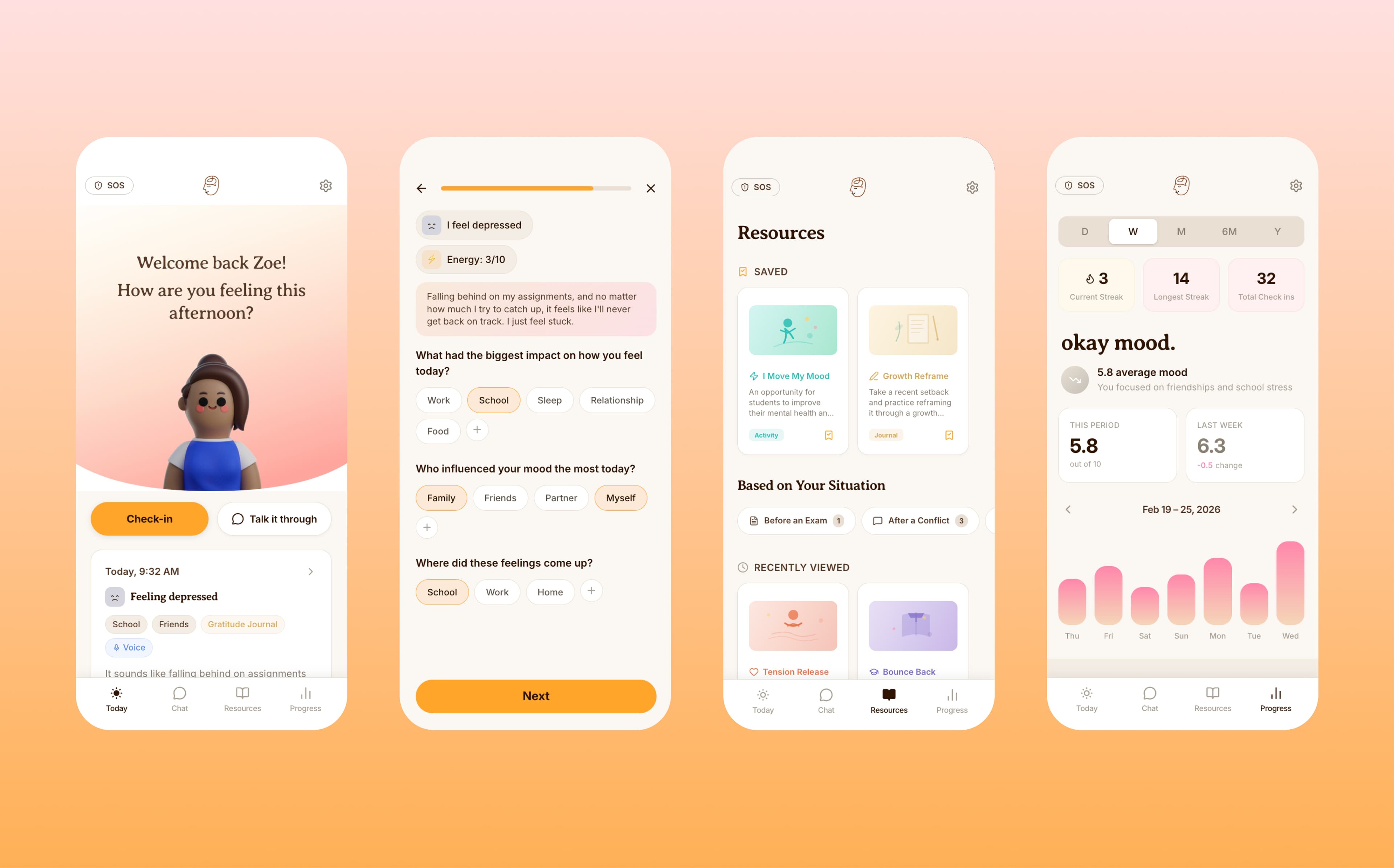
NuMind: Progress Made With Every Word
A self-realization resource converting negative thoughts into a nurturing positive mindset.
Daily guided reflections
Gain emotional clarity through structured, CBT-based journaling
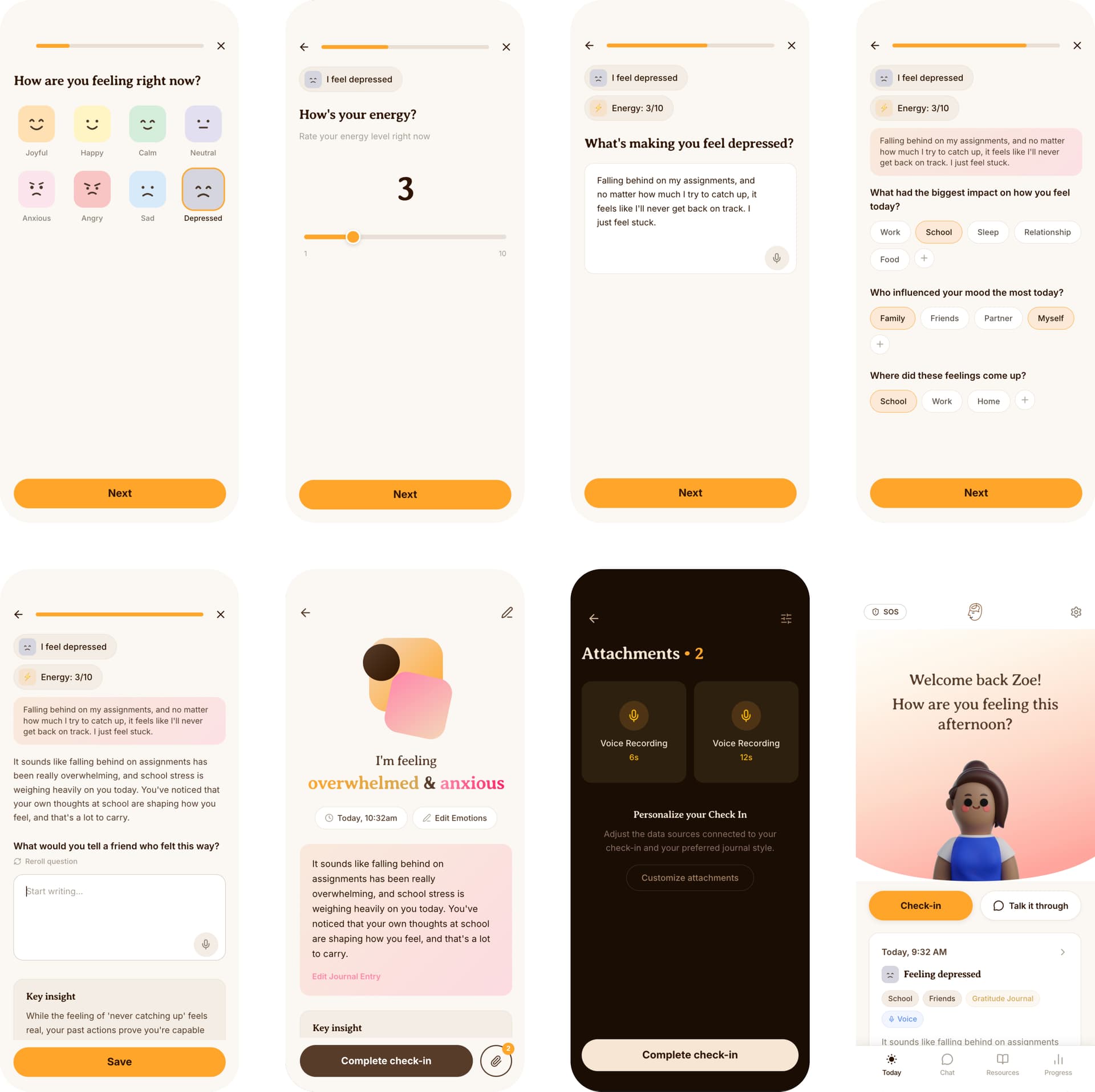
The daily check-in guides users through a 6-step flow to untangle emotional patterns:
Emotion Selection
Choose your current emotional state
Energy Level
Log your energy level on a scale of 1 to 10 using a slider
Describe the Feeling
Briefly journal what triggered that emotion
Context Breakdown
Reflect on who, what, and where contributed to the feeling
Deeper Exploration
Guided question to dig further into the "why"
Insight Generation
Users receive a takeaway or realization from their entry
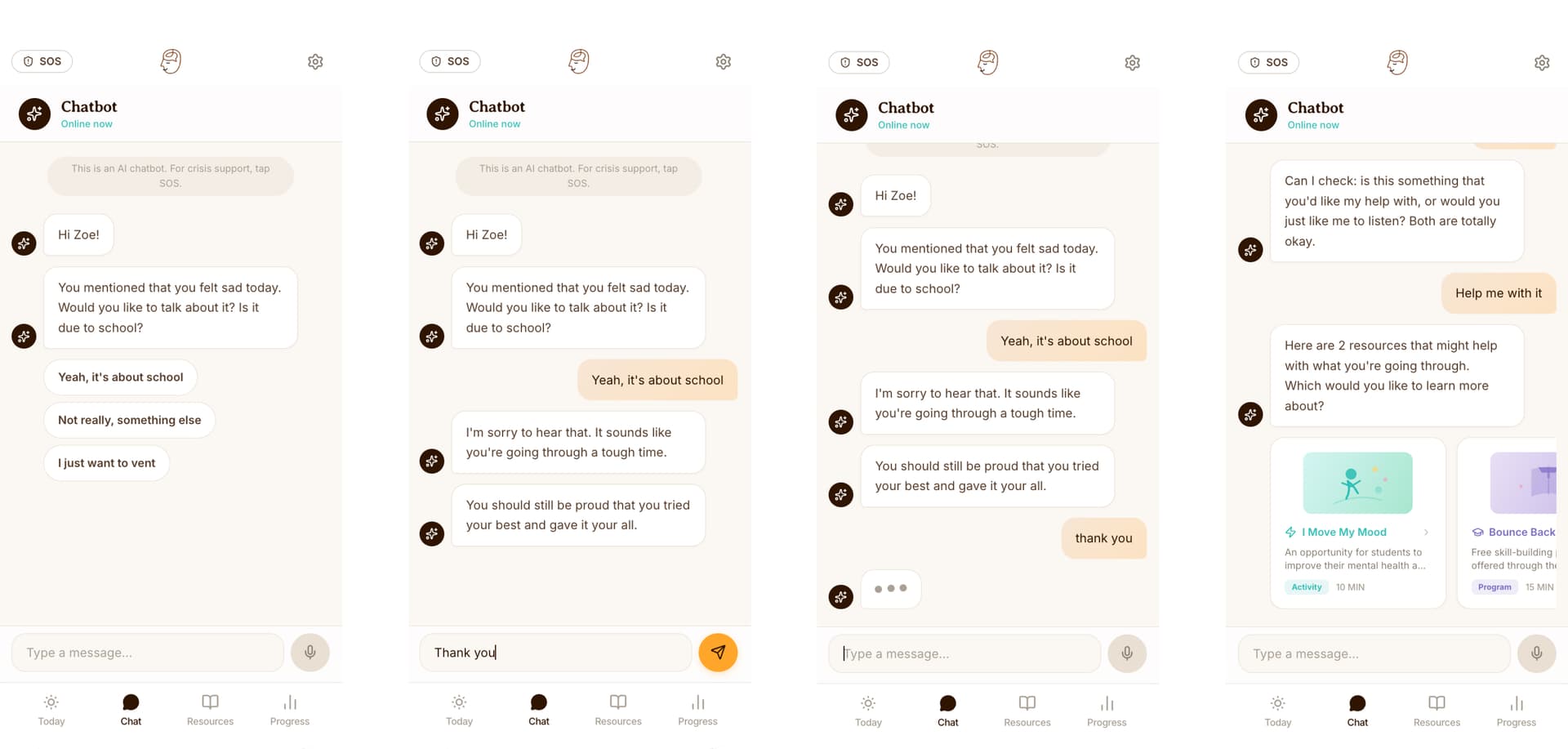
Real-time support via chatbot
Engage in meaningful, supportive conversation whenever it’s needed
The Mini-Me chatbot acts like a calm, wiser version of yourself. It provides:
- •Immediate encouragement and support anytime
- •Guides users through exercises to reframe negative thoughts
- •Contextual suggestions for verified school resources
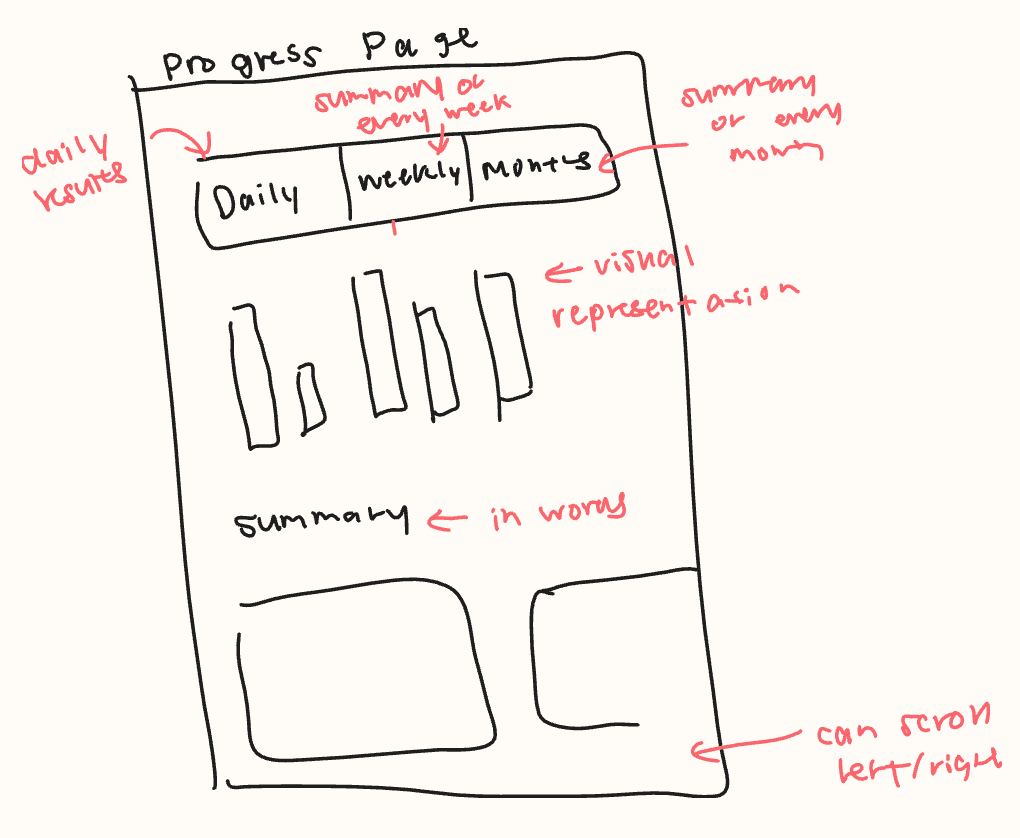
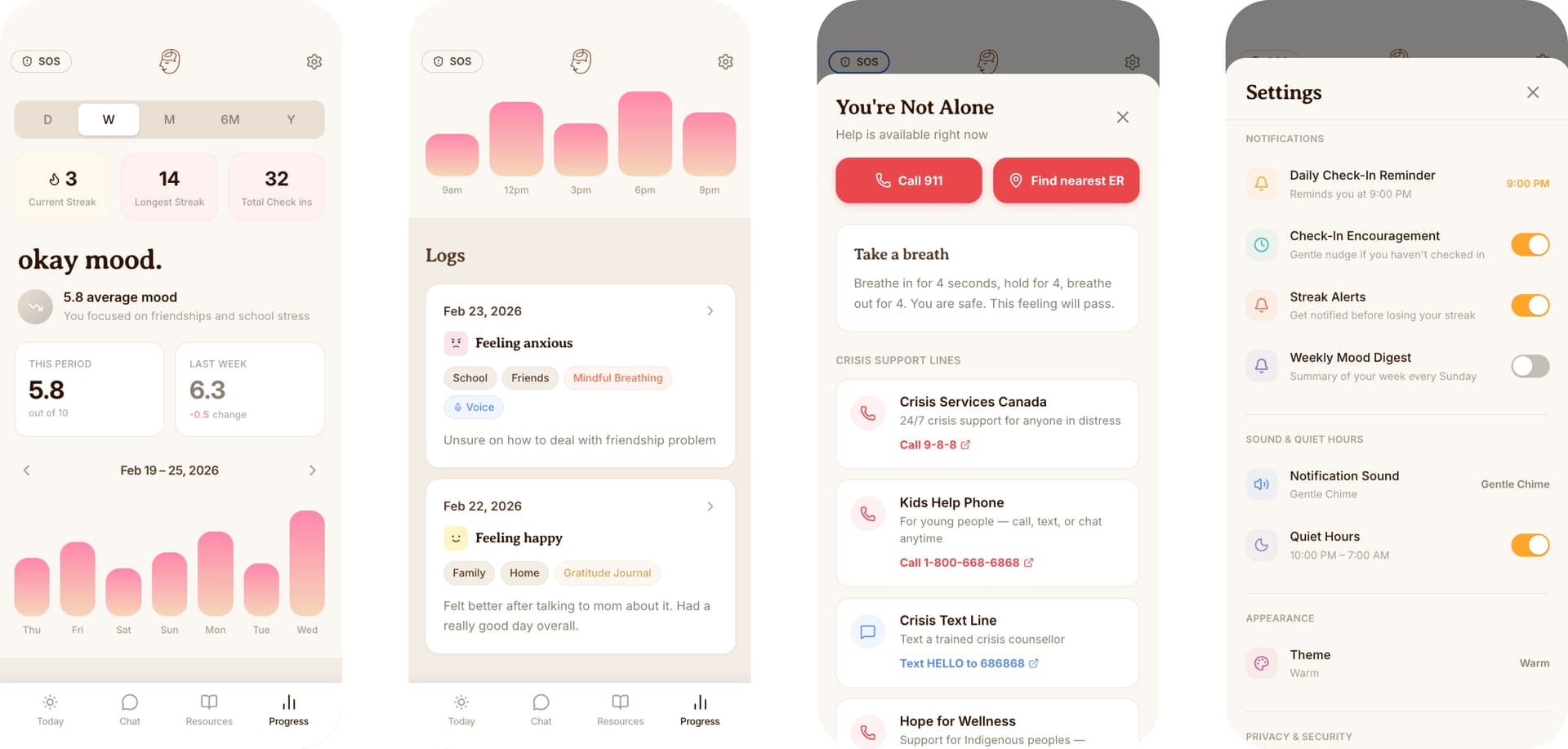
Mood tracking & progress insights
Monitor emotional trends and track growth over time
- •Tracks streaks, total check-ins, and average mood
- •Allows users to view previous journal entries
- •Offers visual progress summaries to motivate consistency
Research findings
Students struggle to access help, even when resources exist
We conducted 11 surveys and 2 interviews with university students to understand their mental health challenges and their experiences with school-provided support.
Four recurring stress themes stood out:
Academic stressors
Career uncertainty
Relationship dynamics
Time management
While time management frequently came up as a stressor, we quickly uncovered a deeper issue. The real problem wasn’t a lack of support, it was that support felt irrelevant, overwhelming, or invisible.
So we reframed the problem:
Why are students’ mental health still suffering despite having access to school resources?
Our second round of research helped us dig into why students avoid these tools:
- •Resources felt too generalized
- •Students lacked clarity on which tool was right for them
- •Support wasn’t emotionally accessible during high-stress moments
- •Many resources lacked transparency or professional validation
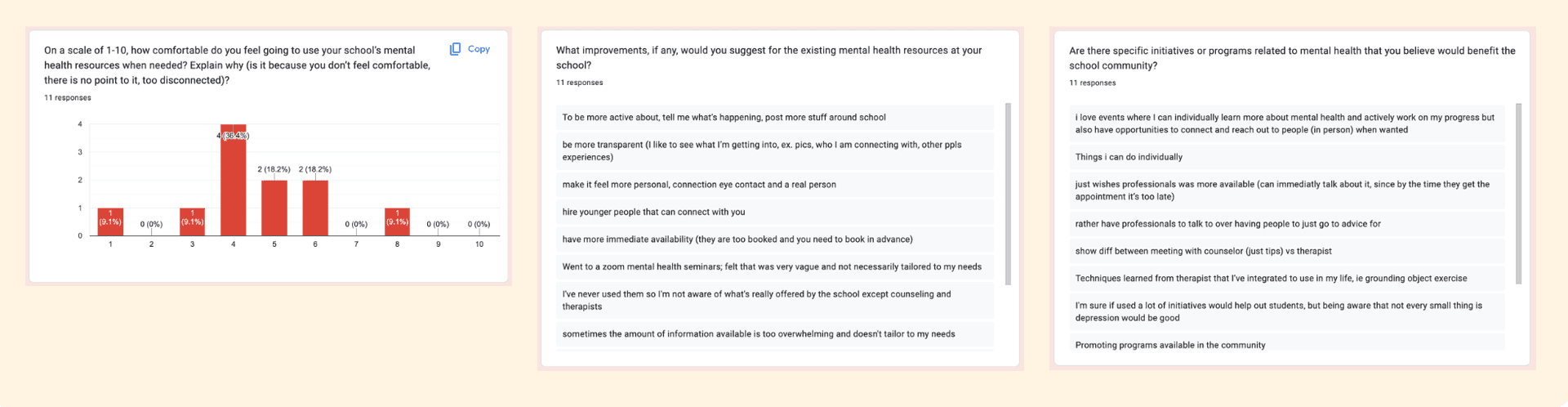
Even high-quality support can go unused if it feels distant, impersonal, or hard to access in the moment it’s needed most.
Target audience
Finding out more about who we’re designing for and their behaviours
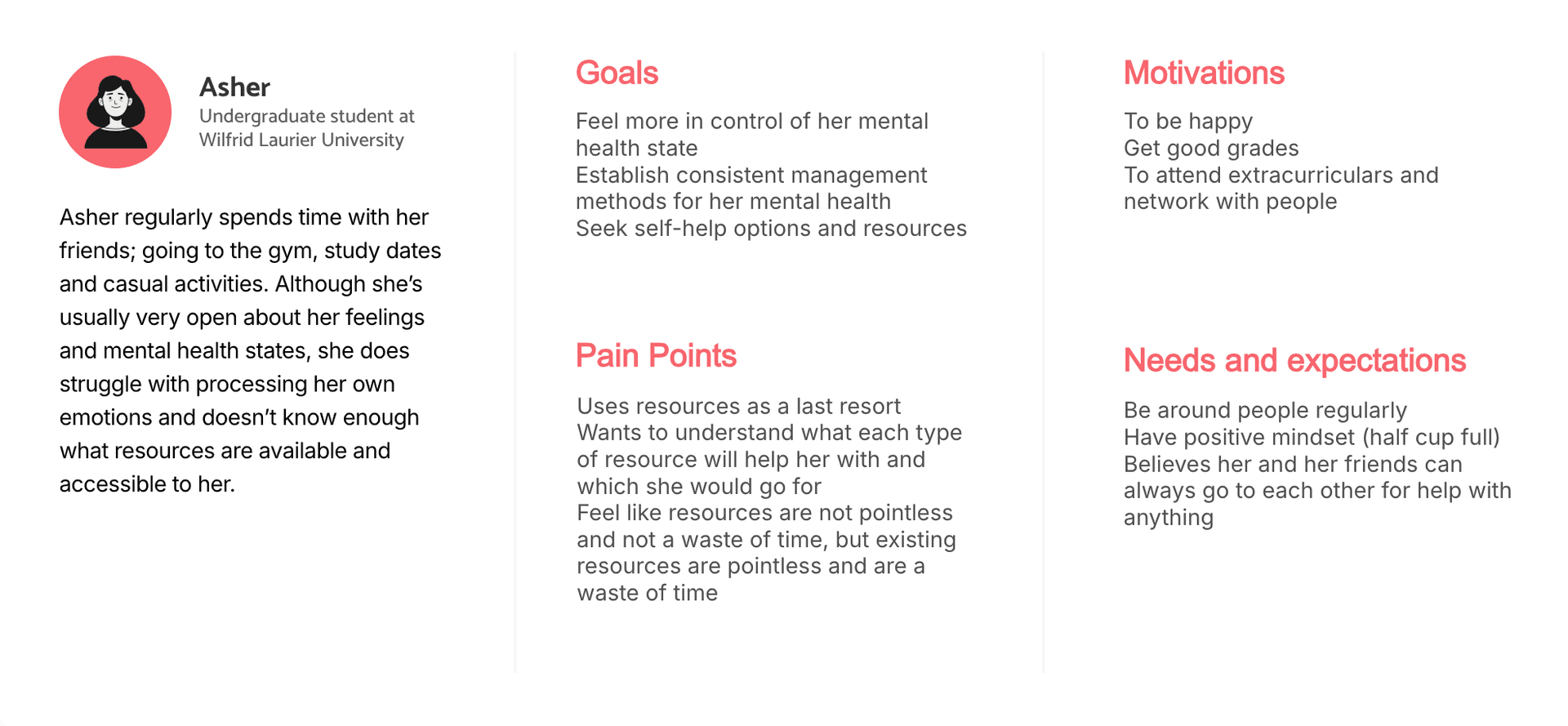
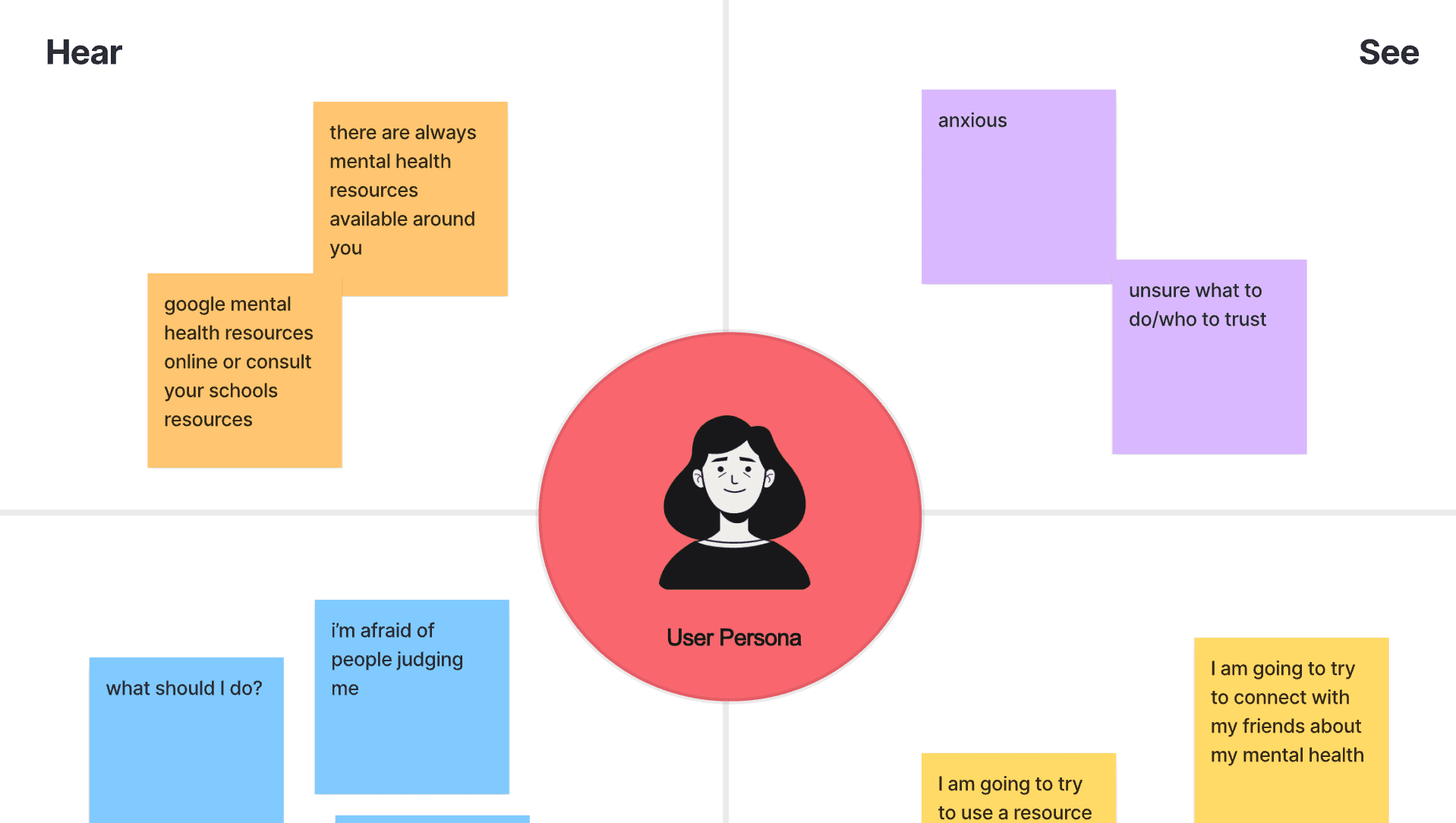
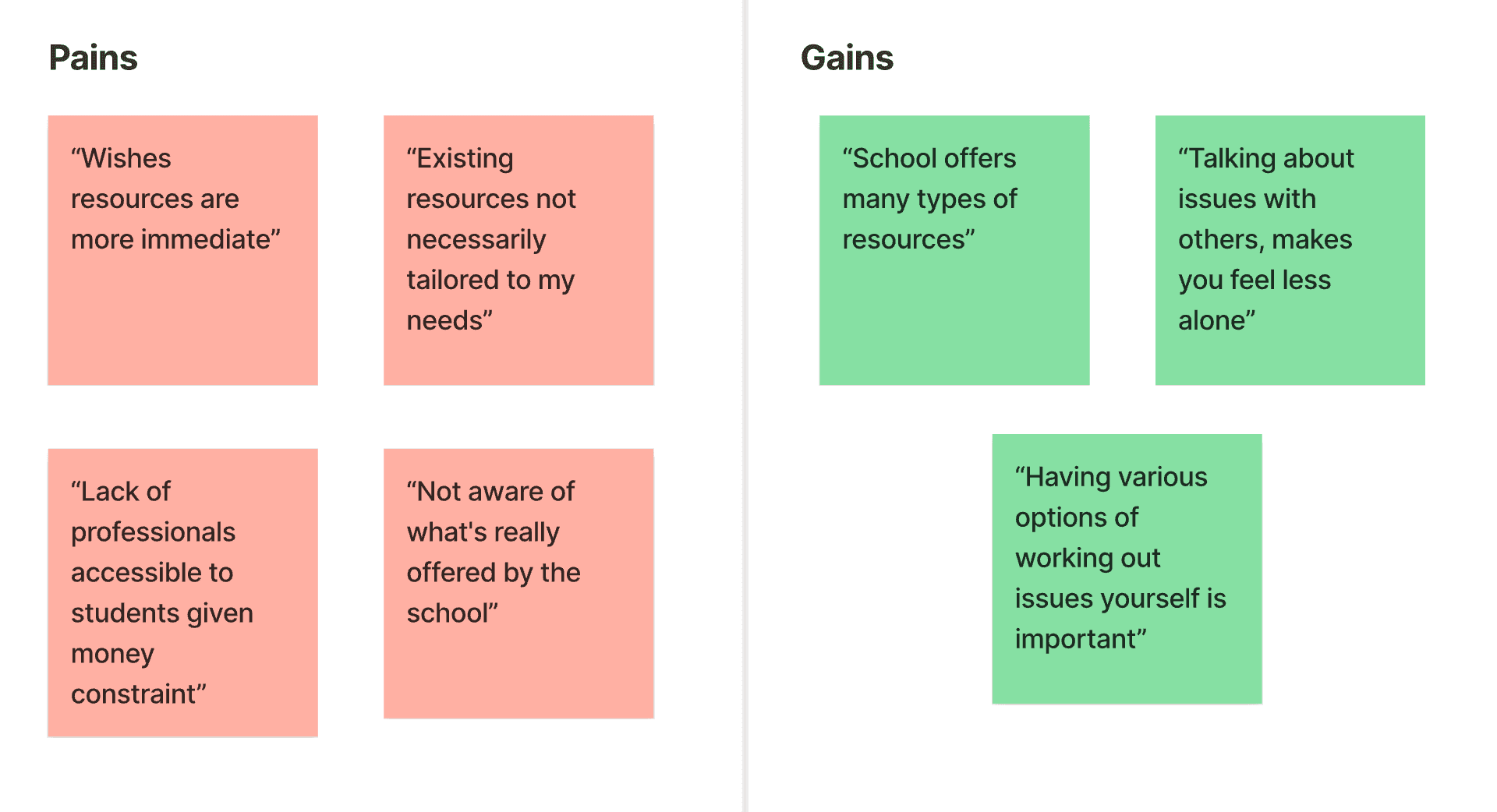
We identified the main characteristics and needs of our target audience that we wanted to reflect in our design through the use of a persona, empathy mapping, and categorizing pain and gain points.
Persona
Empathy mapping
Pain & gain points
Analysis
Key takeaways based on users’ pain points
Students struggle to process their emotions and want to feel more in control
Students don't know what resources are available and suitable for them
Existing resources seem pointless due to them being vague and generalized
Defining the problem to focus on the struggles of the user:
Students try to keep their mental health in check by finding a readily available mental health resource that’s right for them, but there’s a lack of confidence in the suitability and benefit of each, ultimately leading them to avoid using resources unless it’s their last resort.
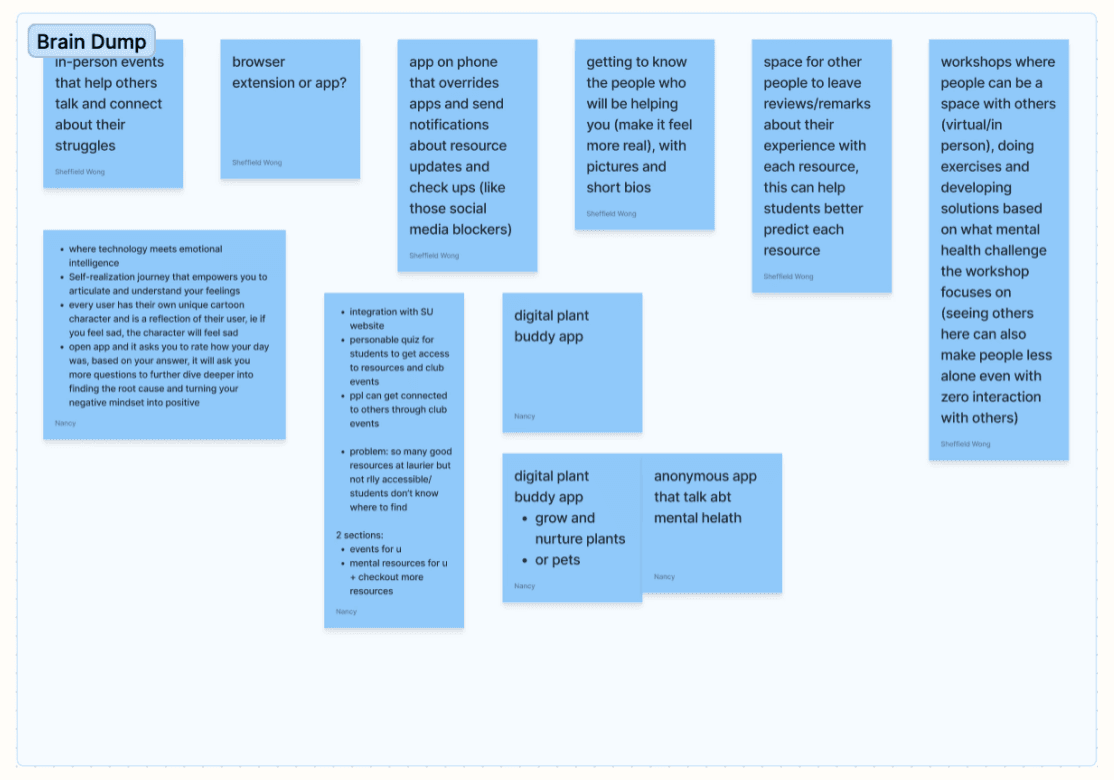
Ideation
Approaching a solution based on pain points
We envisioned a space that’s:
- •Conversational (like talking to yourself when you’re calm)
- •Private, reflective, anonymous
- •Action-oriented without pressure
Solving pain point #1
Students struggle to process their emotions and want to feel more in control
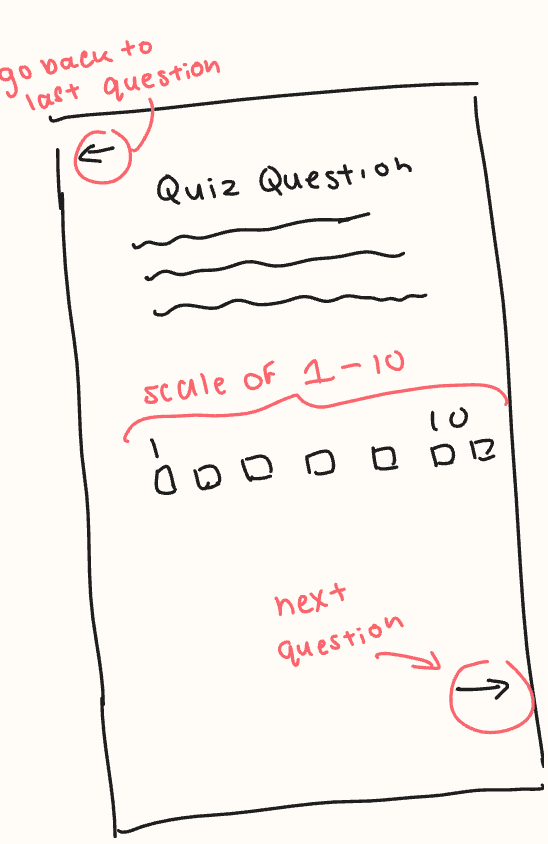
Reflection questions
Users can express themselves authentically anonymously and privately
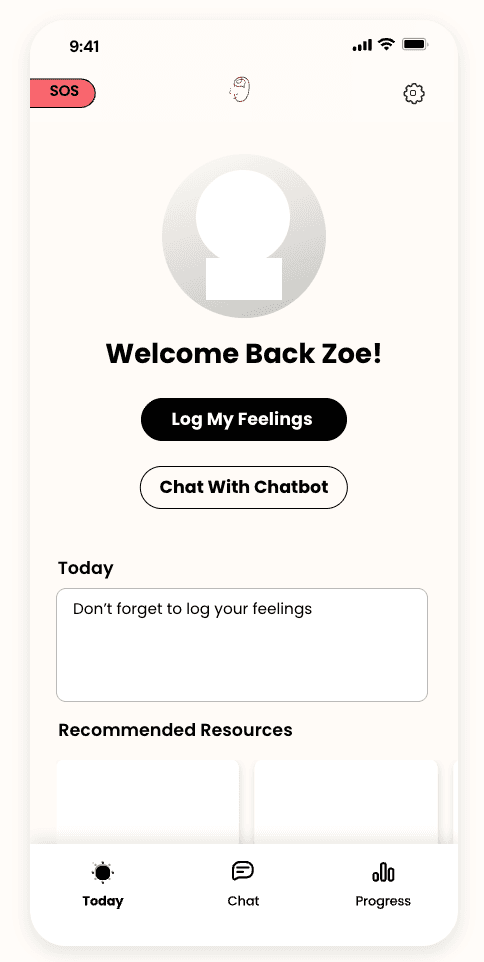
SOS button
Provides immediate access to essential resources and support services
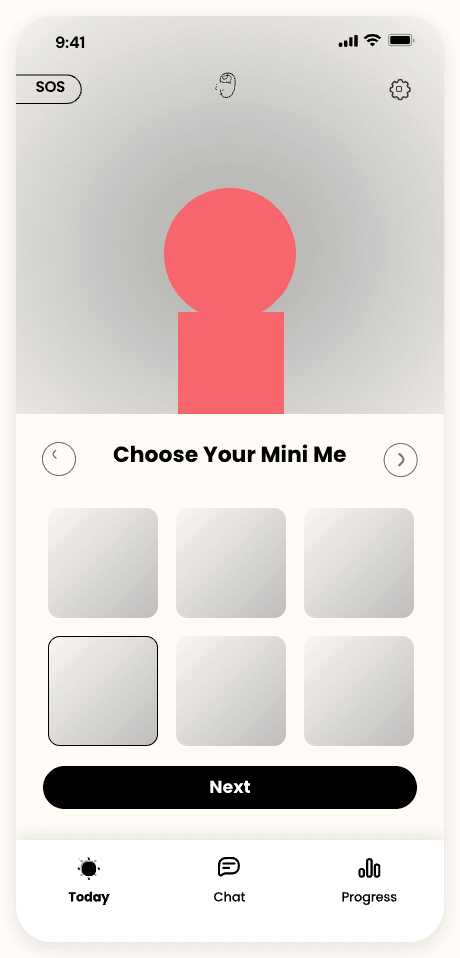
Mini-me avatar
Visual metaphor to serve as a mirror to explore their inner thoughts and emotions
Solving pain point #2
Students don't know what resources are available and suitable for them
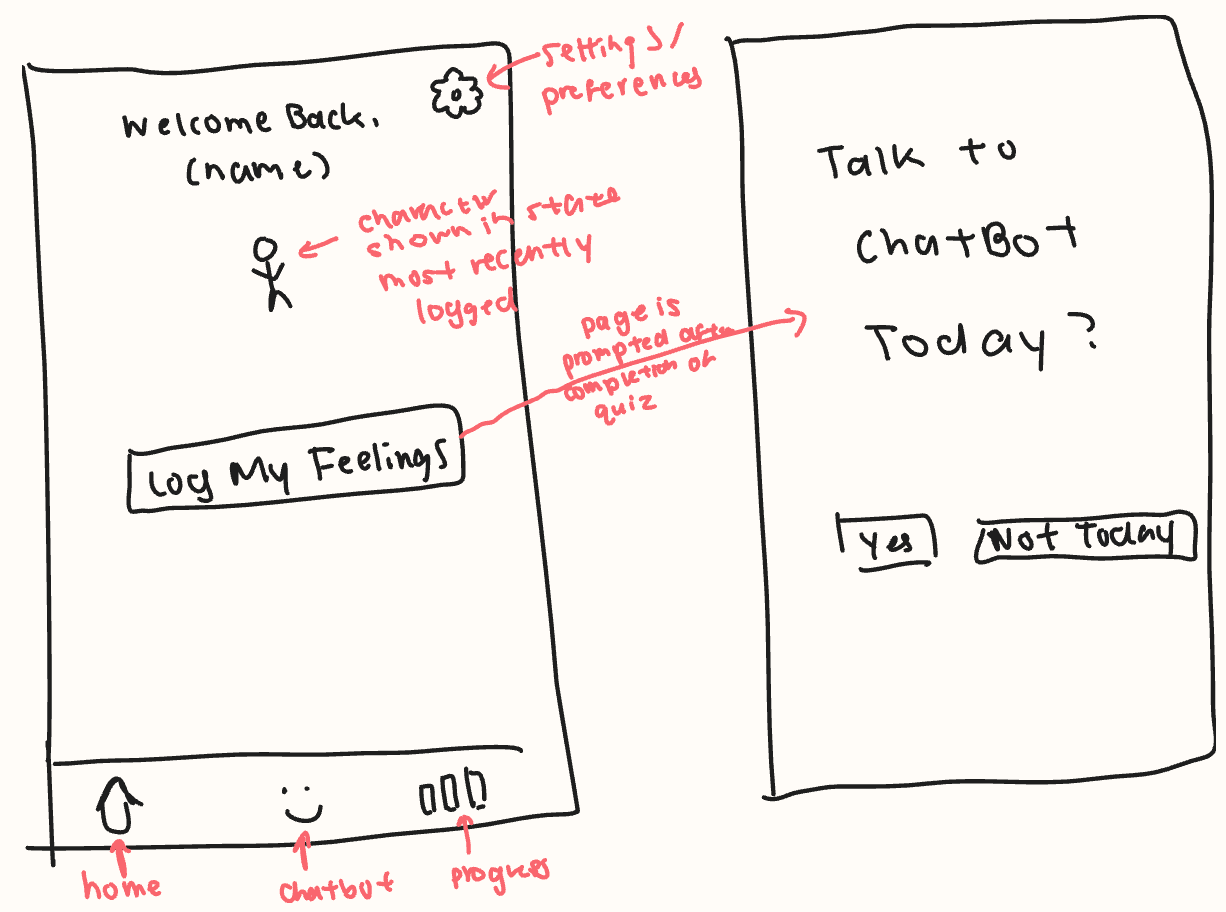
Chatbot prompts
- •Guides students through reflection
- •Walks with you through activities, so you’re not alone
- •Suggests personalized support based on how you’re feeling
Solving pain point #3
Existing resources seem pointless due to them being vague and generalized
Relevant resources
- •Only shows resources reviewed by licensed professionals
- •Pulls directly from the student’s school, so it feels trustworthy
The Outcome
Won 1st Place for best mobile-first design
NuMind stood out for its empathetic design approach and seamless user experience. Judges highlighted the avatar personalization and AI chatbot as particularly innovative solutions for making mental health support more approachable for students.
UI design
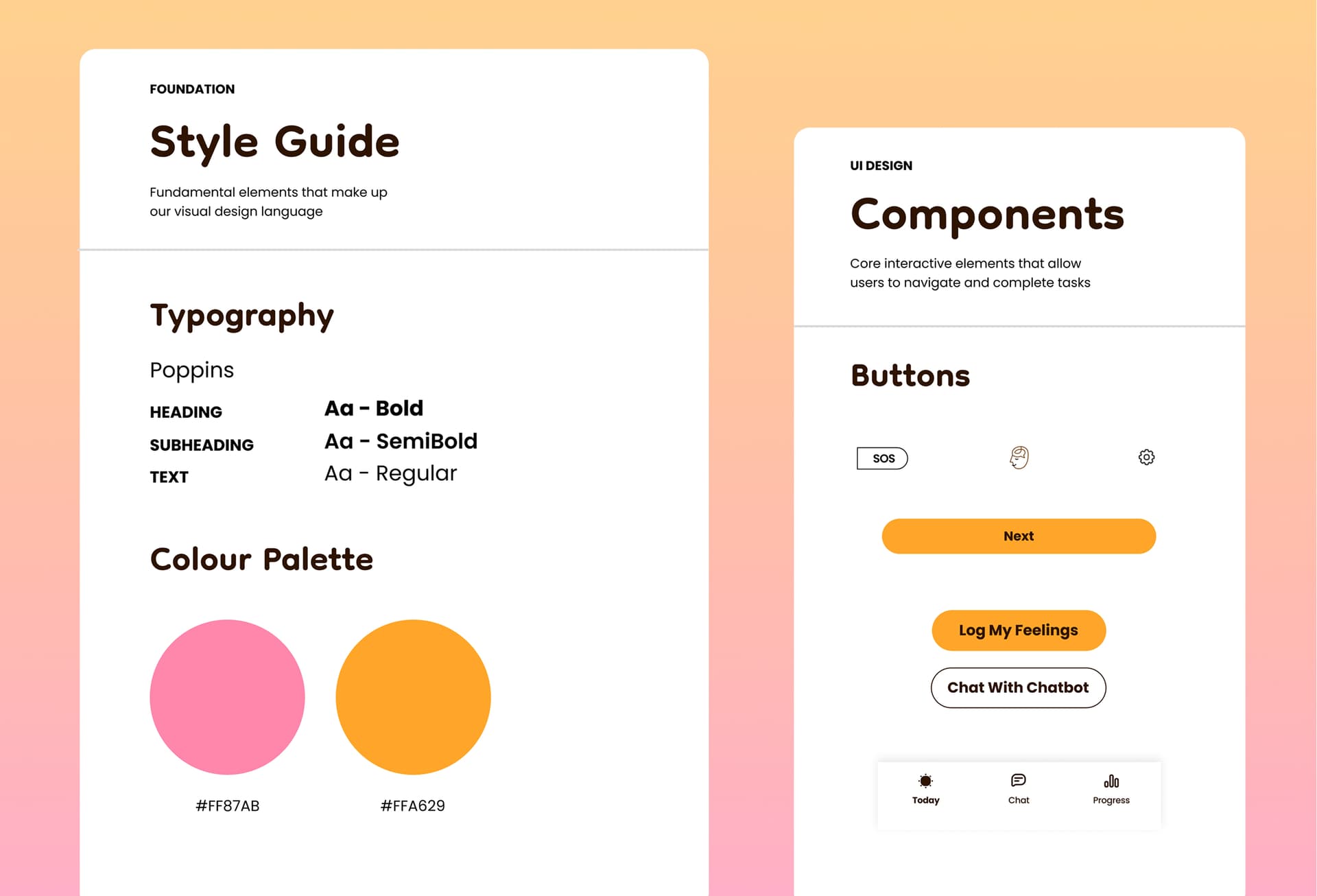
Design system & style guide
Design system + WCAG colour adherence
Fundamental elements that make up our visual design language, including typography, colour palette, and core interactive components.
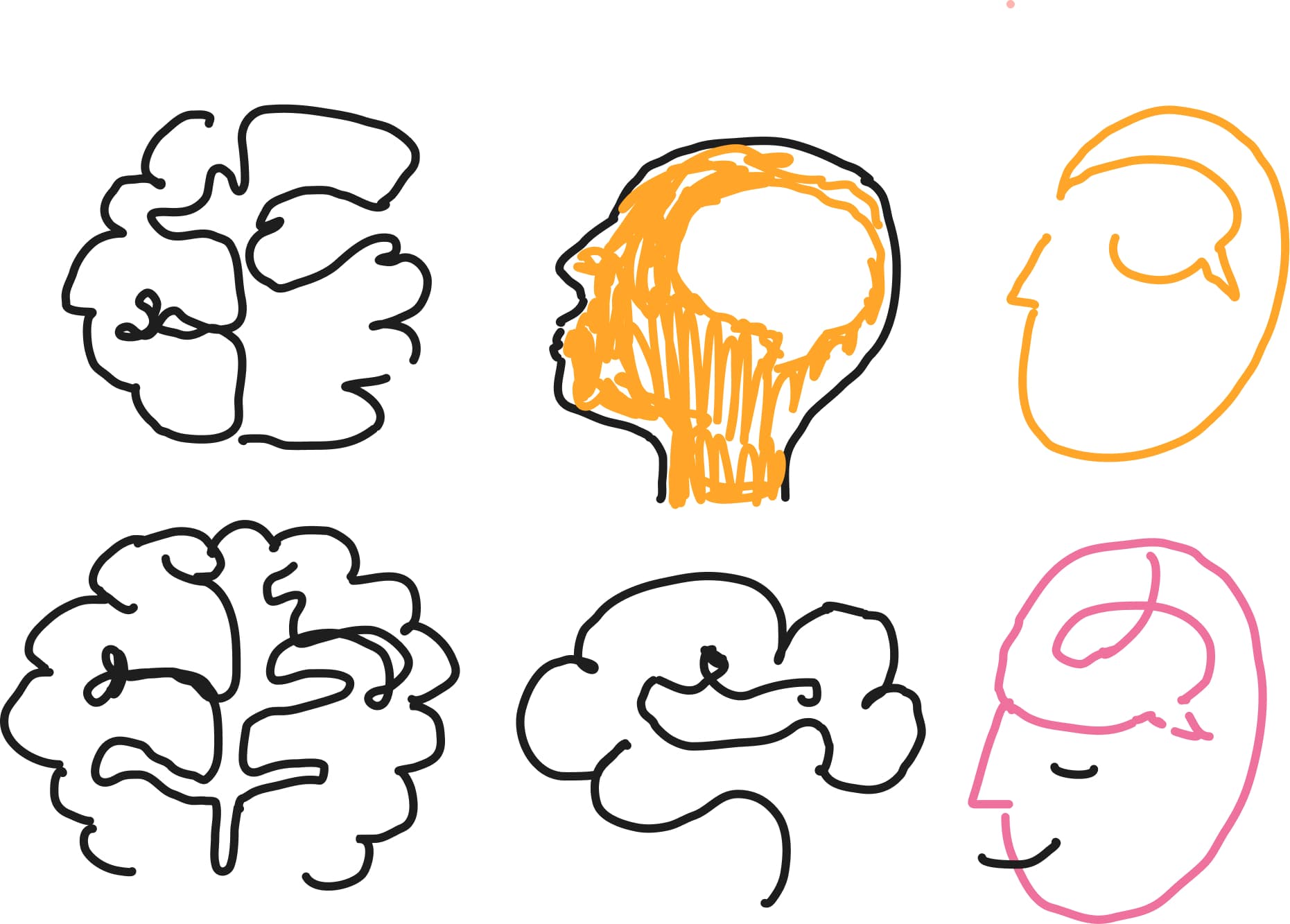
Logo and visual components exploration
The NuMind brand system is heavily inspired by the visual feel of a peaceful, mindful sunrise. The tranquil, modern, and simple look of these designs is a throughline that inspires every aspect of the system.
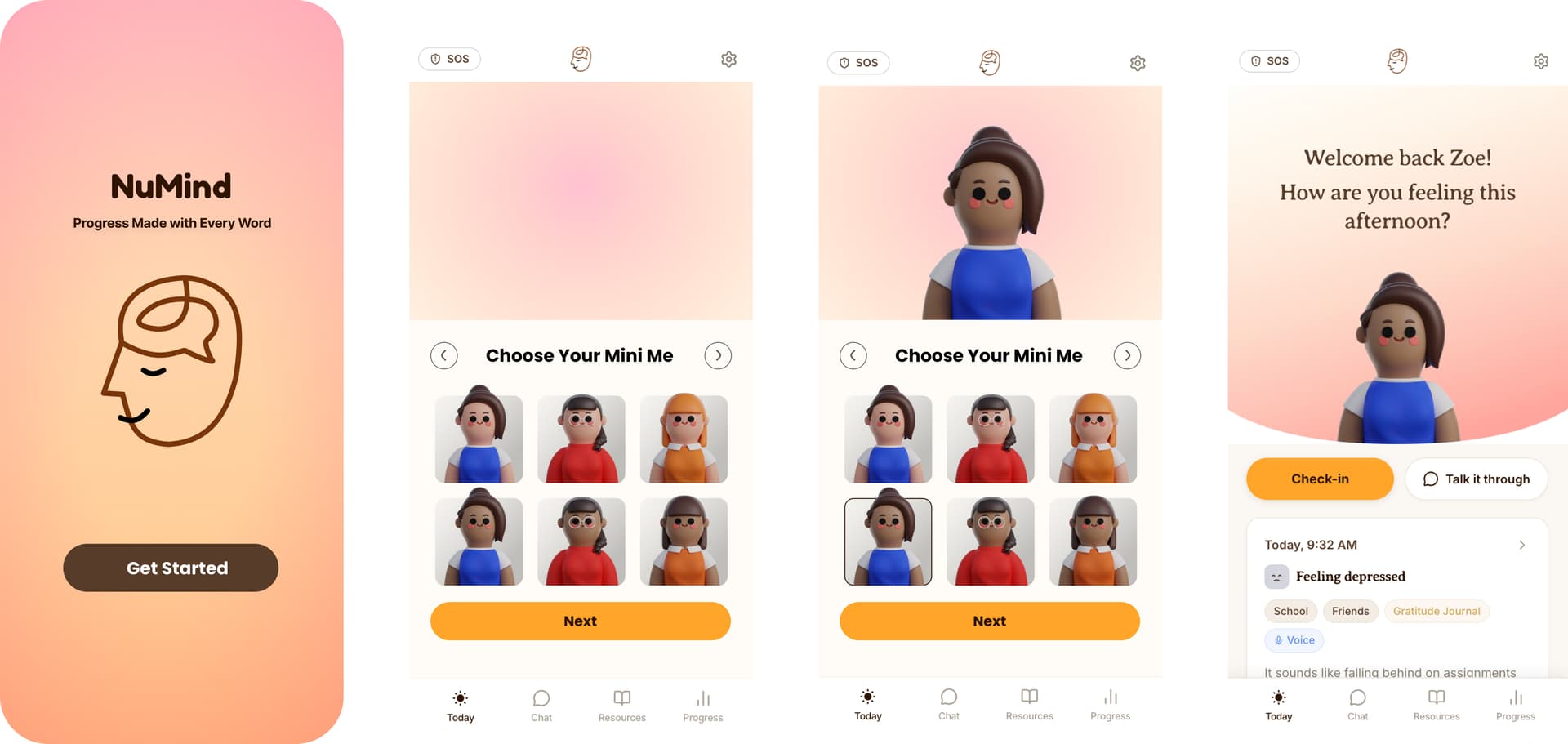
Designs and flows
The final product
Onboarding and setting up Mini-Me
Filling out reflection questions
Chatting with Mini-Me Chatbot
Tracking progress, SOS button, and settings
Reflection
If I had more time...
More user feedback
With just 48 hours, we couldn't fully test or iterate. I would've gone back to validate assumptions, refine the flow, and make sure the experience met real student needs.
Community engagement
Not all students want to reflect alone. I'd explore ways for users to connect even anonymously to share thoughts or support. It would make the app more inclusive.
Deeper progress insights
We built monthly summaries, but I'd expand this to show long-term trends and emotional milestones. Seeing growth over time can help users stay motivated.
What did I learn?
Take risks
We shifted focus from time management to accessibility. It felt risky mid-way, but following the data made the solution more relevant and effective.
Take breaks
After hours of hitting a wall, we took a short break and came back with one of our best ideas. Pausing helped us reset and think clearly.
Stay curious
Asking better questions helped us see the real problems. Instead of assuming, we stayed close to what students actually needed and designed from there.